
Ankle Dorsiflexion Exercises for Better Squats and Mobility
If your ankles feel stiff in squats, lunges, or step-downs, you are not alone. Limited dorsiflexion is one of the most common movement restrictions in strength training. The good news is that dorsiflexion is trainable. The better news is that you do not need an endless mobility routine to see progress. What matters most is choosing ankle dorsiflexion exercises that build range you can actually control under load.
Dorsiflexion is the ability of the knee to travel forward over the foot while the heel stays down. In squats, it helps you reach depth with better balance. In daily life, it affects walking mechanics, stairs, and even how your feet load during running. Improving it usually comes down to two goals: increasing tolerance in the end range and strengthening control in that range.
What Limits Dorsiflexion for Most People
Before picking drills, it helps to understand why dorsiflexion feels limited. Restrictions often come from a combination of:
- Calf stiffness, especially when the knee is bent
- Ankle joint stiffness from limited movement exposure or past injury
- Foot mechanics that reduce stability or cause compensation
- Poor control at end range, even if passive range exists
This is why one stretch rarely solves the issue. Effective ankle dorsiflexion exercises address both range and control.
A Quick Self-Check to Guide Your Training
Here is a simple way to see what you are dealing with.
- Stand facing a wall with one foot forward
- Keep the heel down
- Try to touch the knee to the wall by driving it forward
- If you cannot reach, step slightly closer and test again
This check is not a diagnosis. It is just a useful way to choose which ankle dorsiflexion exercises deserve more attention.
Exercise 1: Controlled Knee-Over-Toe Reps
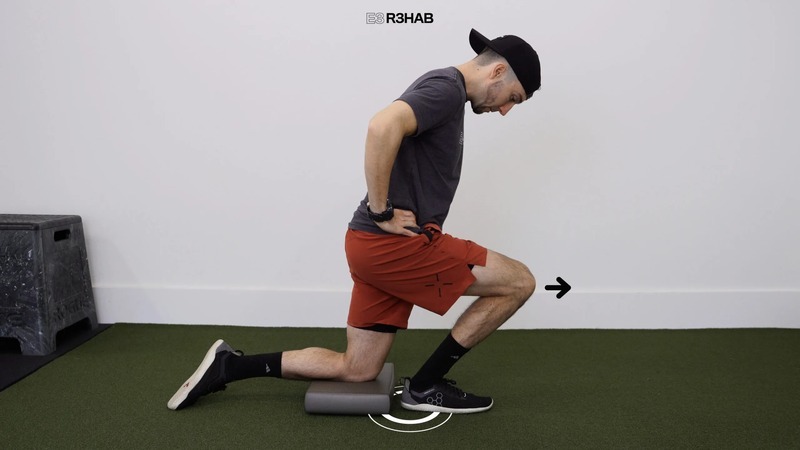
This is one of the simplest ankle dorsiflexion exercises, but only if you do it with control.
How to do it:
- Stand in a split stance
- Keep the front heel heavy on the floor
- Drive the knee forward over the toes slowly
- Pause briefly at the end range
- Return under control
What to focus on:
- Heel stays down
- Foot remains stable, no arch collapse
- Movement is slow enough to feel the range
This drill builds tolerance in dorsiflexion without aggressive stretching. It also teaches the body that the range is usable.
Exercise 2: End-Range Isometric Holds
Range improves faster when the body learns to trust it. Isometrics are great for this.
How to do it:
- Find your deepest controlled dorsiflexion position with the heel down
- Hold for 10 to 20 seconds
- Repeat 3 to 5 times
These holds are one of the most practical ankle dorsiflexion exercises for people who feel “stiff under load.” They improve confidence and control where you actually need it.

Exercise 3: Slow Eccentric Calf Raises
Many people stretch the calves but never strengthen them through full range. Eccentrics are a bridge between mobility and strength.
How to do it:
- Raise onto the toes
- Lower slowly for 3 to 5 seconds
- Keep the heel path controlled
- Repeat for 6 to 10 reps
This builds strength through the ankle and can improve how stable dorsiflexion feels during squats. It also supports tissue tolerance around the Achilles and calf complex.
Exercise 4: Heel-Elevated Squat Patterning
This is where some lifters unlock better squats quickly. Mild heel elevation reduces ankle demand so you can practice depth with better posture, then gradually bring that pattern back to flat foot squats.
A stable angled platform such as an Incline Board can be useful here because it provides a consistent heel-elevated setup for practice reps. The goal is not to hide limitations. The goal is to practice a clean squat pattern while you develop better dorsiflexion and control.
If you use heel elevation, keep the reps slow and technical. You want to feel the bottom position under control, not rush through it.
How to Program Ankle Dorsiflexion Exercises Without Overdoing It
The best mobility plans are boring. Consistent, short, and repeatable.
A simple weekly approach:
- 3 to 5 days per week
- 5 to 8 minutes per session
- Choose 2 to 3 ankle dorsiflexion exercises
- Keep intensity moderate, avoid forcing pain
Example structure:
- Controlled knee-over-toe reps, 2 sets of 8 each side
- End-range isometric holds, 3 holds of 15 seconds
- Slow eccentric calf raises, 2 sets of 8
If you squat the same day, do the controlled reps and isometrics before squats, then do eccentrics after training.
Common Mistakes That Make Dorsiflexion Work Less Effective
A few mistakes show up repeatedly:
- Chasing a deeper stretch while the foot collapses
- Letting the heel lift during drills
- Doing random stretches with no progression plan
- Training dorsiflexion only when you feel tight
- Skipping control work and relying only on passive stretching
If you want ankle dorsiflexion exercises to carry over to squats, the heel must stay down, the foot must stay stable, and the movement must be slow enough to build control.

How to Tell If Your Dorsiflexion Is Improving
The easiest indicator is not a perfect test number. It is how your squats feel.
Signs progress is happening:
- The bottom position feels less rushed
- Heels stay down more naturally
- Knee travel feels smoother
- Torso stays more upright without effort
- Depth is more consistent rep to rep
You can still use the wall check weekly, but do not obsess over tiny changes. Most improvements show up first as better control and comfort.
Many educational discussions of squat mechanics emphasize that ankle mobility only matters when you can use it under load. That same “usable range” idea shows up often in mobility-focused resources like SlantBoardPro, where the goal is steady, repeatable progress rather than aggressive stretching.
Final Thoughts
The best ankle dorsiflexion exercises are the ones you can repeat consistently and progress gradually. Controlled knee-over-toe reps build tolerance. Isometric holds build trust. Slow eccentrics build strength in the range. And heel-elevated practice can help you pattern better squats while dorsiflexion improves.
Keep sessions short, keep the heel down, and focus on control. Over time, dorsiflexion stops feeling like a limitation and starts feeling like a stable part of your movement.