
Why Furniture Drawings Matter More Than Ever in Bespoke Interior Projects
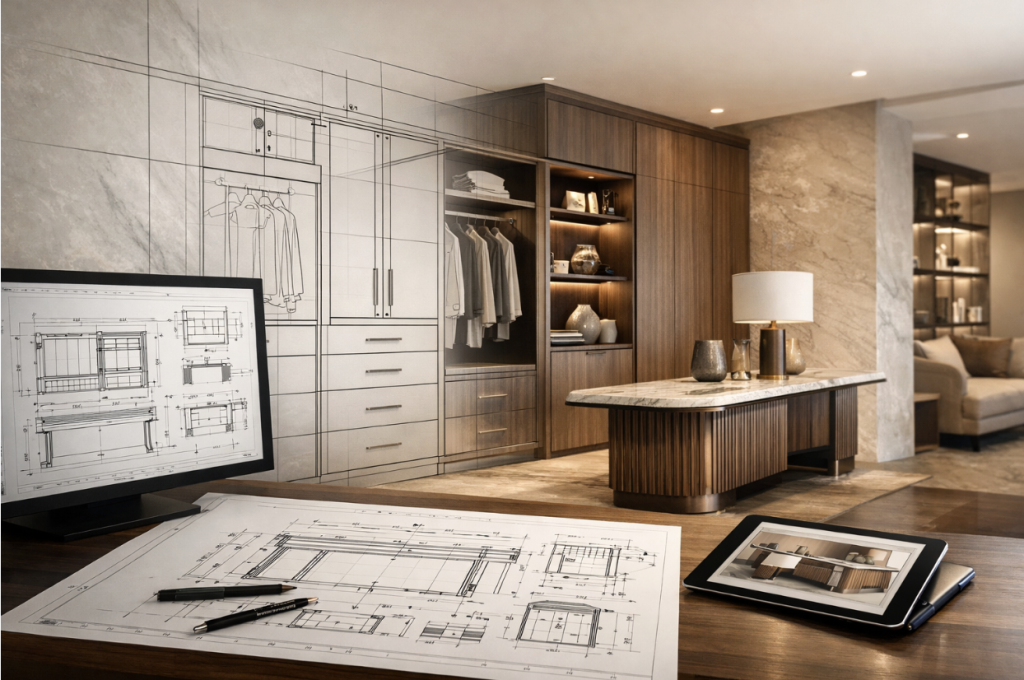
Bespoke interiors are no longer reserved for ultra-luxury residences or flagship hospitality projects. Today, residential designers, commercial studios, and architectural firms alike are specifying custom furniture as a standard part of their design language. With that shift comes a new level of complexity—tighter tolerances, layered materials, integrated services, and higher client expectations.
In this environment, Custom Furniture CAD Drawing for Interior Designers has evolved from a behind-the-scenes technical step into a strategic foundation for successful project delivery. Detailed furniture drawings now play a critical role in design clarity, execution accuracy, and cross-disciplinary collaboration.
As bespoke interiors grow more ambitious, furniture drawings are no longer optional—they are indispensable.
What Furniture Drawings Are—and How They’ve Evolved
At their core, furniture drawings are technical documents that translate design intent into buildable instructions. Traditionally, these were hand-drafted or minimally detailed shop drawings created late in the project lifecycle. That approach no longer holds up.
Modern furniture drawings—especially CAD-based—have evolved in three important ways:
1. From Concept Support to Production Authority
Today’s drawings don’t just support a design idea; they define it. Furniture shop drawings now include:
- Precise dimensions and tolerances
- Material specifications and finishes
- Joinery and construction details
- Hardware, mechanisms, and fixings
- Installation and interface information
These drawings serve as the single source of truth for manufacturers, installers, and project managers.
2. From Static Documents to Collaborative Tools
CAD drafting for interiors enables rapid iteration. Designers can adjust proportions, manufacturers can flag feasibility concerns, and consultants can review integration points—all before anything is built.
3. From Isolated Pieces to Integrated Systems
Custom furniture is often tied into architectural elements, lighting, HVAC, and technology. Furniture drawings now account for wall conditions, floor build-ups, service voids, and tolerances across trades.
This evolution reflects a broader reality: bespoke furniture has become more technical, not just more beautiful.
Why Bespoke Projects Demand Higher Precision Than Ever
Custom interiors leave little room for improvisation. Unlike off-the-shelf products, bespoke furniture must fit precisely within a unique spatial, architectural, and functional context.
Several industry shifts are driving the need for greater drawing precision:
- Tighter construction schedules with less tolerance for on-site revisions
- Complex material combinations such as stone, metal, veneer, upholstery, and integrated lighting
- Higher client involvement, with expectations for transparency and predictability
- Global fabrication, where designers and manufacturers may never meet in person
In these conditions, vague or underdeveloped drawings create risk. Misaligned expectations at the drawing stage inevitably surface later as delays, cost overruns, or compromised design intent.
How CAD Drawings Reduce Errors, Miscommunication, and Rework
One of the most compelling arguments for robust furniture drawings is risk reduction. CAD-based documentation minimizes ambiguity and ensures every stakeholder is working from the same information.
Clear Communication Across Disciplines
Interior designers think spatially and visually. Manufacturers think structurally and materially. CAD drawings bridge that gap by translating aesthetics into build logic.
Well-executed drawings answer critical questions upfront:
- How is this piece constructed?
- How does it connect to surrounding architecture?
- What tolerances are acceptable?
- Where are services routed?
Cost Control Through Early Resolution
Ambiguity is expensive. Detailed drawings allow manufacturers to price accurately, identify potential conflicts, and propose alternatives before fabrication begins.
This protects designers from late-stage budget shocks and helps clients make informed decisions early.
Fewer Site Issues and Revisions
When furniture arrives on site with unresolved details, installers are forced to improvise—often at the expense of design quality.
Accurate CAD drawings significantly reduce:
- On-site modifications
- Material wastage
- Delays caused by redesign or refabrication
The result is smoother execution and better outcomes for everyone involved.
The Strategic Value of Custom Furniture CAD Drawing for Interior Designers
Rather than viewing drawings as a downstream technical task, leading studios now treat them as a strategic design asset.
For Interior Designers
- Design intent protection from concept to installation
- Greater control over proportions, detailing, and finishes
- Professional credibility when collaborating with high-end manufacturers
- Reduced stress during fabrication and site coordination
Furniture drawings empower designers to push creative boundaries while maintaining technical confidence.
For Clients
- Visual clarity about what is being built
- Predictable costs and timelines
- Fewer surprises during installation
- Higher-quality finished pieces that match expectations
Clients may never see every drawing detail, but they feel the results.
For Manufacturers
- Clear scope definition and fewer assumptions
- Efficient production planning
- Reduced back-and-forth during fabrication
- Improved margins through accurate quoting and fewer errors
Strong drawings create better partnerships between designers and fabricators.
Real-World Scenarios Where Furniture Drawings Make the Difference
Consider a residential project featuring a full-height custom wardrobe with integrated lighting, concealed handles, and mixed materials.
Without detailed CAD drawings:
- Lighting conflicts with internal shelving
- Veneer grain alignment is inconsistent
- Door clearances clash with adjacent walls
With comprehensive furniture drawings:
- Lighting channels are coordinated with carcass construction
- Veneer sequencing is defined and approved
- Installation tolerances are resolved before manufacturing
Or take a commercial workspace with custom reception desks, banquettes, and feature walls—each interfacing with flooring, power, and AV systems. Precise drawings ensure that fabrication aligns seamlessly with architectural and MEP constraints.
These aren’t edge cases—they’re everyday realities in bespoke interior projects.
Furniture Drawings as a Competitive Advantage
As the interior design industry becomes more sophisticated, the ability to deliver build-ready information is a differentiator. Studios that invest in high-quality furniture drawings:
- Win trust from manufacturers
- Deliver projects with fewer disputes
- Scale more efficiently across multiple projects
- Maintain design integrity under pressure
In this context, CAD drafting for interiors is not just a technical service—it’s a core competency.
Conclusion: Why Furniture Drawings Are Now Non-Negotiable
Bespoke interior design is as much about execution as it is about vision. As projects grow more complex and expectations rise, the margin for error continues to shrink.
Custom Furniture CAD Drawing for Interior Designers has become a professional necessity—one that underpins accuracy, collaboration, and design excellence. Far from being a technical afterthought, furniture drawings are the connective tissue between concept, craft, and completion.
In modern bespoke interiors, great design doesn’t end with an idea. It succeeds through precision.
Meta Title:
Custom Furniture CAD Drawing for Interior Designers Guide
Meta Description:
Learn why Custom Furniture CAD Drawing for Interior Designers is critical to bespoke interiors, improving accuracy, coordination, cost control, and execution.