Running Instagram Ads for a Music Release
Instagram makes it simple to turn any post into a paid campaign within a few taps, and that simplicity creates a strange gap. Artists press a button, spend a modest budget, and wait for streams that often never arrive. The interface promises visibility, yet that promise rarely turns into listeners who come back for a second play.
Music advertising asks for something different from selling a product with an obvious purchase decision. A song needs attention before it needs anything else, and paid placement only widens the circle of people who might give it that attention. Spending money cannot invent a hook that isn’t there, and it cannot make an unfinished release sound finished. What a budget can do is put a real release in front of people who were never going to stumble across it on their own, which is the whole promise behind social media music promotion.
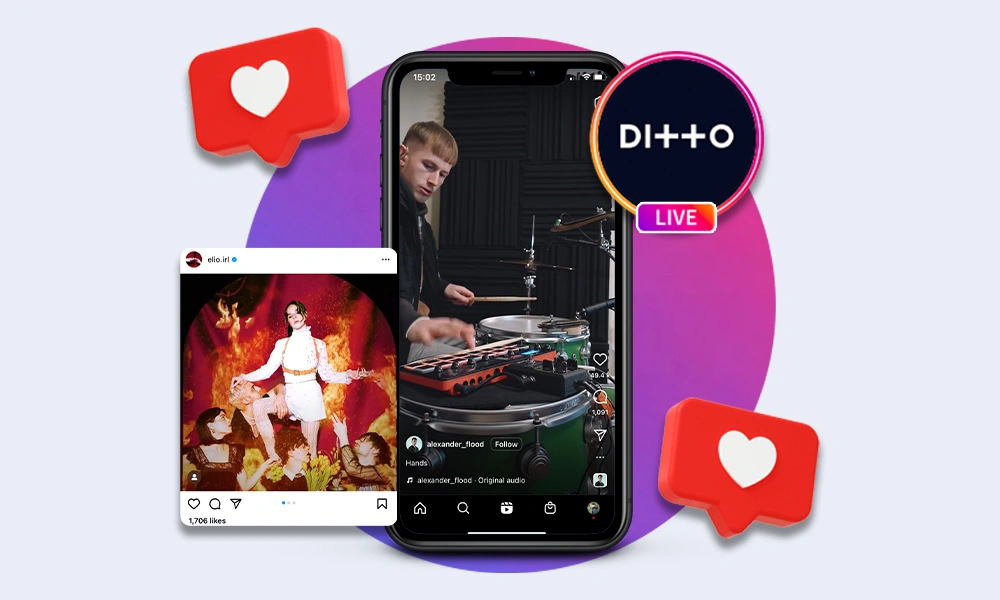
This article walks through campaign setup, audience targeting, creative choices, and the numbers worth watching once a release goes live.
What Instagram Ads Can and Can’t Do for a Release
Paid placement on Instagram puts a release in front of more people who fit a chosen profile. Spending cannot create curiosity that the song, the artist’s presence, or the landing page fails to earn on its own. The useful distinction here separates distribution, which ads supply, from persuasion, which still depends on the material itself.
Reaching Listeners Who Have Never Heard the Artist
For an artist with a small following, the clearest benefit of Instagram ads for musicians is access to people who sit entirely outside the current audience. These viewers arrive without prior context. They don’t recognize a name, a face, or a sound, and they decide within a few seconds whether to keep watching or scroll past.
That decision speed changes how targeting should work. A broad category like people who like music says almost nothing about whether a specific listener will respond to a specific track. Targeting built around comparable artists, genre habits, and behavior tied to similar sounds gives the algorithm something concrete to work with, and it puts the release in front of people whose listening patterns already resemble what the song offers.
Why Ads Amplify a Release Rather Than Rescue One
Paid placement increases how many people see what a release already contains. If the song, the artist’s positioning, the creative, or the page it links to gives a viewer no reason to stay, extra impressions just create more chances for someone to look away.
A strong hook, a compelling performance, a distinctive visual, a memorable story, or a recognizable artistic identity all give an ad something to build on. When someone decides to promote a song on Instagram, the campaign works best around one of these elements, not around hope that volume alone will change how people react.
Setting Up a Campaign That Fits a Music Release
Building a campaign involves a series of decisions beyond pressing a boost button. The right setup depends on what the artist actually wants, whether that means video plays, website visits, streaming platform visits, or an audience that can be retargeted later. Each goal points toward a different set of settings inside the campaign.
Running Instagram Ads Through Meta Ads Manager
Boosting a single post from the Instagram app works for a quick test, but a serious release campaign benefits from the added control found in Ads Manager. The structure follows three levels: campaign, ad set, and ad.
The campaign level sets the overall objective. The ad set level controls audience, placements, budget, and schedule. And the ad level holds the creative itself, along with copy, the call to action, and the destination link.
Instagram advertising runs through Meta’s broader system, so artists working with Meta ads for musicians gain access to detailed audience settings, placement choices, and reporting that a simple boosted post never exposes. That access matters once a campaign needs adjustment partway through.
Choosing the Objective: Traffic, Video Views, or Conversions
The objective chosen at the start shapes what Meta’s system looks for within the available audience, so this decision deserves real thought.
Video views suit a campaign built around getting more people to watch the creative itself, which fits well early in a release cycle when the goal centers on exposure, while a traffic objective makes sense when the action that matters happens outside Instagram, on a streaming platform or a website. At the same time, conversions fit situations where a real action can be tracked and optimized around, such as a save, a pre-save, or a purchase.
Where the Click Should Land
What happens after someone taps an ad often decides whether the campaign was worth its budget. The page on the other side deserves as much thought as the audience or the creative itself.
Sending traffic straight to a streaming platform removes a step and keeps friction low, because the listener arrives exactly where a stream counts. Flexibility comes from a smart link page instead, which lets the artist list several platforms at once and reveals which one people actually pick. Dedicated release pages and artist websites can work too, especially when the campaign needs to show details that a single link cannot hold.
The right choice depends on the objective behind the campaign and how familiar the audience already is with the artist. A cold audience meeting an artist for the first time often needs a softer landing spot than a fan who already knows the name.
Budget and Campaign Length for a Single
No fixed number works for every release, but rough starting points beat guessing blind. A daily budget between $15 and $30 per ad set usually generates enough impressions to read early signals in a moderate, mid-size market. Testing two or three creative variants together needs a combined spend closer to $40 to $60 for fair delivery across each.
Run the test phase for at least five to seven days, shorter windows rarely clear the platform’s learning phase. Once a variant wins, shift budget toward it and extend the campaign two to four weeks. Watch for fatigue past three weeks, rising frequency with dropping click-through signals it’s time to refresh the creative.
Building Audiences Worth Paying For
Audience construction should answer one question: who has a real reason to care about this release? That’s different from who happens to be available inside Meta’s targeting options. A cold viewer who has never heard the artist needs a different setup from someone who already clicked, watched, or followed.
Interest and Lookalike Targeting for Music
Interest-based targeting starts with musical preferences, comparable artists, genres, and cultural behaviors tied to a scene or sound. These labels give the algorithm a starting point, but they remain proxies. Someone tagged as a fan of a genre may still scroll past a specific track without a second glance.
Lookalike audiences work on a different principle. They take an existing group, a source of engaged listeners, past customers, or profile visitors, and find people who share traits with that group. The output only stays useful if the input carries weight.
A lookalike built from people who streamed a full song, saved a release, or spent real time watching a video behaves nothing like one built from a broad pool of casual, low-effort clicks. For independent artist promotion, where budgets stay tight, choosing a meaningful source audience often matters more than expanding reach.
Retargeting Listeners Who Already Engaged
Retargeting operates as a separate stage from finding new listeners. Someone who watched a video past a certain point, visited a profile, clicked through to a site, or interacted with content in any measurable way has already cleared an initial threshold of attention. Treating that person the same way as a stranger wastes a chance to move them further.
A cold audience needs an introduction: who the artist is, what the song sounds like, why it might matter. Someone who is already engaged doesn’t need that setup again. A message built around “you’ve seen this, now hear the rest” fits their position better.
Audience windows and exclusions keep this distinction clean. Without them, someone who already streamed the track keeps seeing the same introductory clip on repeat, which wastes budget and can feel repetitive to the viewer. Instagram music promotion works best when each stage of the funnel gets its own message, timed around what the person has already done.
Creative That Works in Feed, Reels, and Stories
Feed, Reels, and Stories all reward speed. People scroll through them expecting quick decisions, and a music ad has to earn a few extra seconds without assuming the viewer knows anything about the artist going in. What matters most is whether the opening moments spark curiosity. Here are the three things that decide whether that opening survives the scroll.
What Has to Happen in the First Three Seconds
An opening has to establish a recognizable sound or visual moment fast, spark some form of curiosity, and give a stranger a concrete reason to keep watching instead of moving on. A few approaches tend to work: leading with the strongest musical moment rather than building up to it, showing the artist performing the hook directly, opening on something visually unusual, using a lyric with sharp emotional specificity, showing a genuine reaction as social proof, or dropping the viewer straight into a story already in motion.
Testing Several Cuts of the Same Video
Rather than producing several unrelated ads from scratch, artists get more useful information by testing variations built from the same footage. A single piece of video can be recut by changing the opening moment, the section of the song used, the overall length, the on-screen text, the framing, the call to action, or the surrounding context.
This approach isolates what actually drove a difference in performance. Was it the hook chosen at the start? The pacing of the edit? The wording on screen? Or was it simply a different audience seeing the same cut?
Vertical Format, Captions, and Sound-Off Viewing
Mobile habits shape what a functional ad looks like. Vertical footage should fill the screen rather than sit as a shrunken horizontal clip surrounded by black bars. Captions carry weight since many viewers scroll with the volume down. Without text conveying the message, part of the audience never reaches for their volume button. Key visuals need to stay clear of Instagram’s interface. Sound sells the ad, but the visual layer earns the right to be heard.
Reading the Results
Instagram’s dashboard offers plenty of numbers, click-through rates, cost per result, engagement counts, and most of them describe activity that stayed inside the platform. Here’s what a few of the most common ones actually reveal, and where they fall short.
Cost per Click vs. Cost per Actual Listener
A single click hides a longer chain of steps. An impression turns into a click, a click turns into a landing-page visit, that visit sometimes turns into a trip to a streaming platform, and only some portion of those visits become an actual stream. Each step loses people along the way.
That means a campaign showing a cheap cost per click can still perform poorly if most of those clicks never turn into a play. Judging a campaign by CPC alone skips over everything that happens after the click. Wherever the available data allows it, artists get more value from estimating the cost of reaching an actual listener rather than stopping at the platform’s headline metric.
Connecting Ad Data to Streaming Data
Connecting advertising activity to streaming outcomes relies on signals that only partially overlap, not a guaranteed chain of cause and effect. Useful ones include ad clicks, landing-page visits, streaming analytics, follower growth, saves, playlist adds, and geographic shifts around the campaign’s timing.
The strongest read comes from watching several move together, a spike in playlist adds alongside targeted regional growth tells more than either alone. Comparing before, during, and after gives a real baseline.
Getting Instagram Ads Right for Music
Running music ads on Instagram well takes constant testing, new audiences, fresh creative cuts, adjusted budgets, based on what the data shows each week. That pace is hard to sustain alone while also writing songs, shooting content, and handling everything else a release demands. A team that manages these campaigns daily has already seen which patterns tend to work and which waste budget, which shortens the path to a setup that actually performs. Services like Decent Music PR build that daily practice into their process, giving artists a working campaign faster than trial and error alone.
Ads Work Best as Part of a Bigger Plan
Instagram ads work as one piece of a release campaign, not the whole strategy. Paired with press coverage, playlist placements, and organic content, paid reach amplifies momentum that already exists instead of trying to create it from nothing. A song backed by a blog feature or a curator’s attention gives an ad something real to point toward.
Artists who track what happens after the click, whether people actually streamed, saved, or followed, spend less over time to reach the same listeners, because that data shows which channels and creative actually convert rather than just which ones look cheap on a dashboard.
Read Also: How to Build a Strong Instagram Presence for Your Business